
My Story
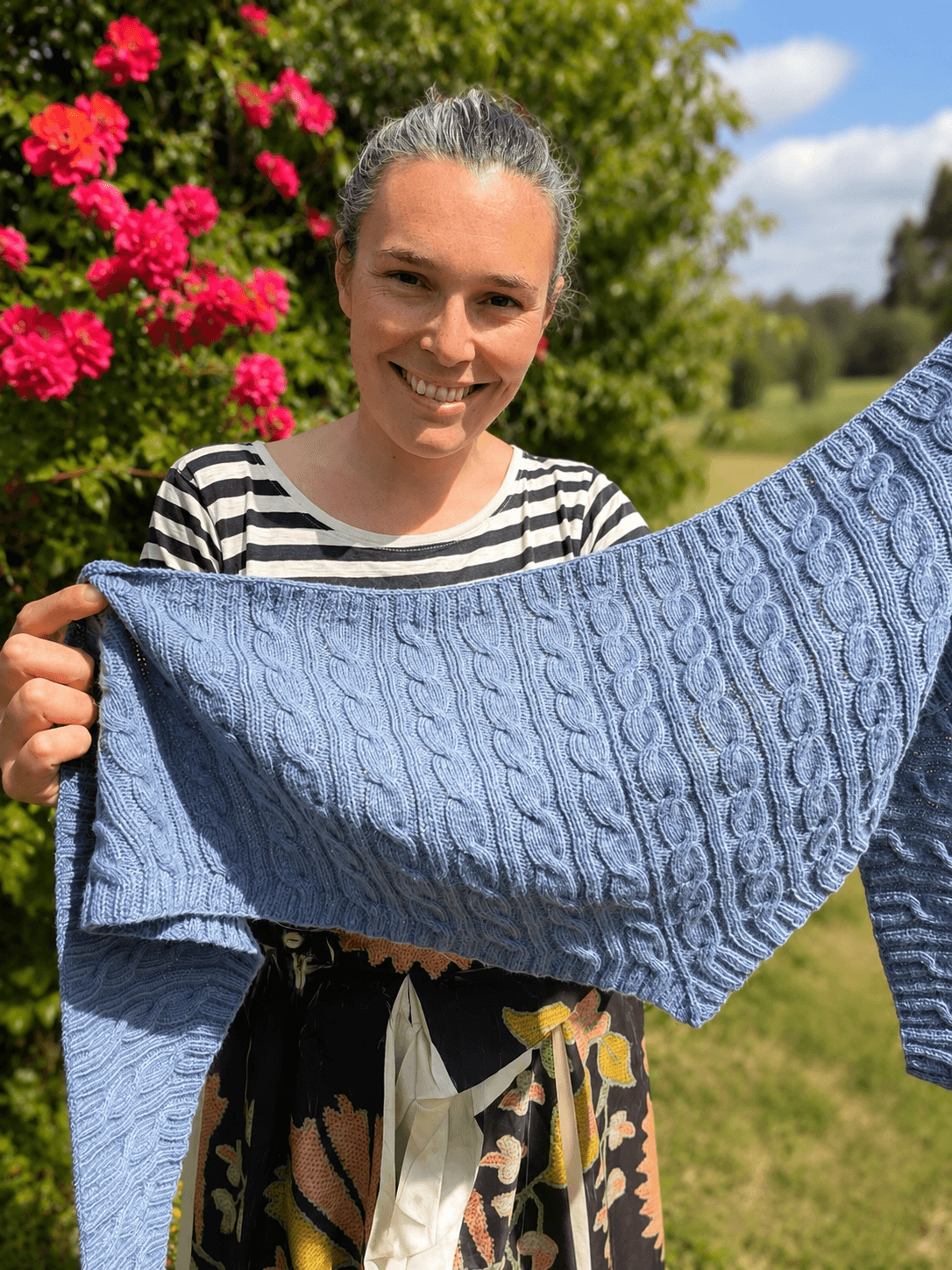
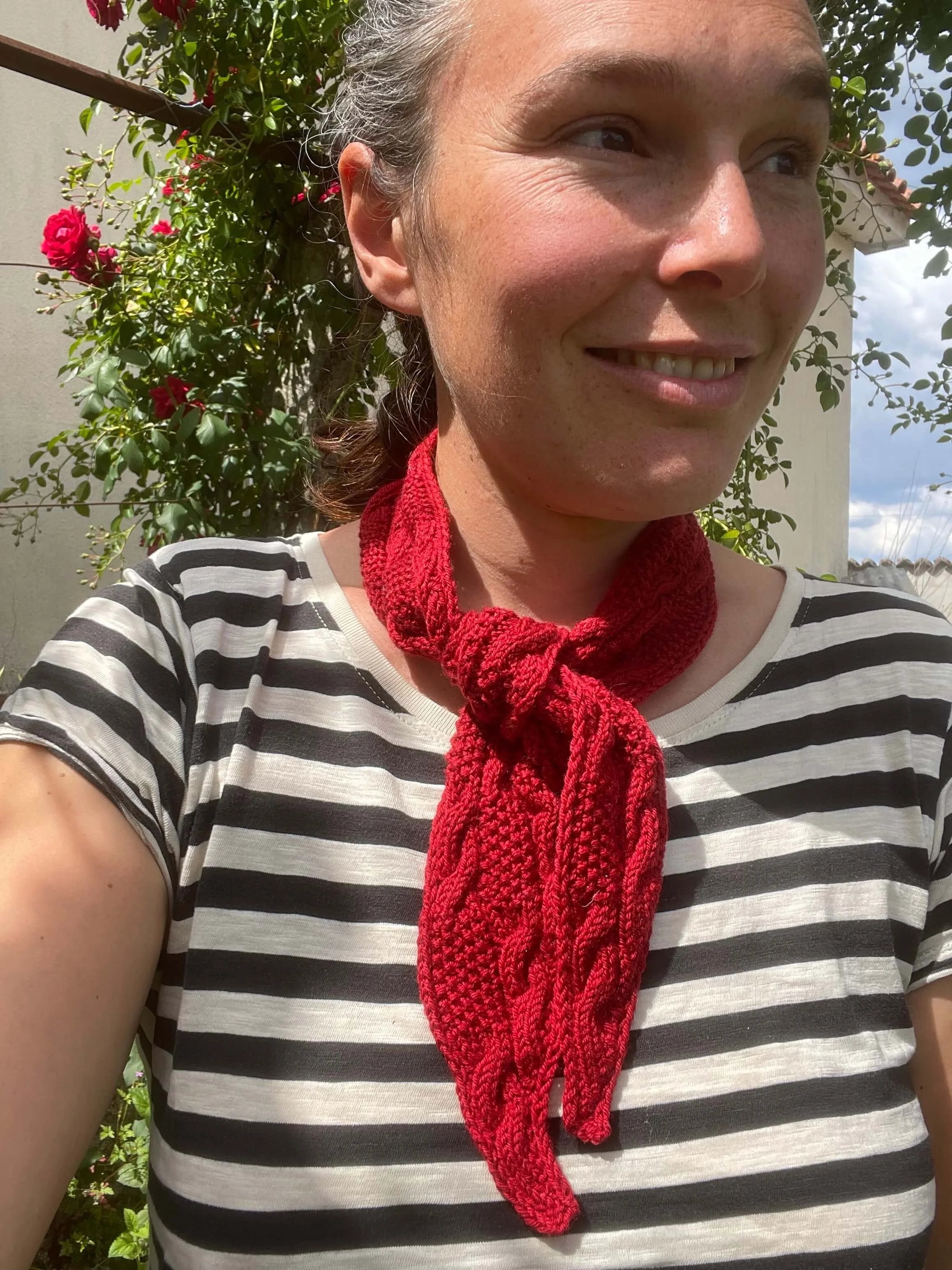
I am Amelia and I design knitwear for men and women that looks good and is fun to make. My pieces are modern but timeless.
Another true love of mine is natural dyeing. Foraging for local plant colour gets my heart racing and I am always on the lookout for good dye plants. It is so exciting to see yarn transformed by plants through the varying seasons. I also dabble in weaving, sewing, quilt-making and embroidery.
I was born in Cambridge, UK. I then studied in London before moving to Bristol to embark on my PhD. After a few years working as a post-doctoral Neuroscientist, my partner and I moved to rural Central Portugal to begin a new chapter! Here we are raising two young children whilst renovating an old farmhouse.
Natural dyeing process
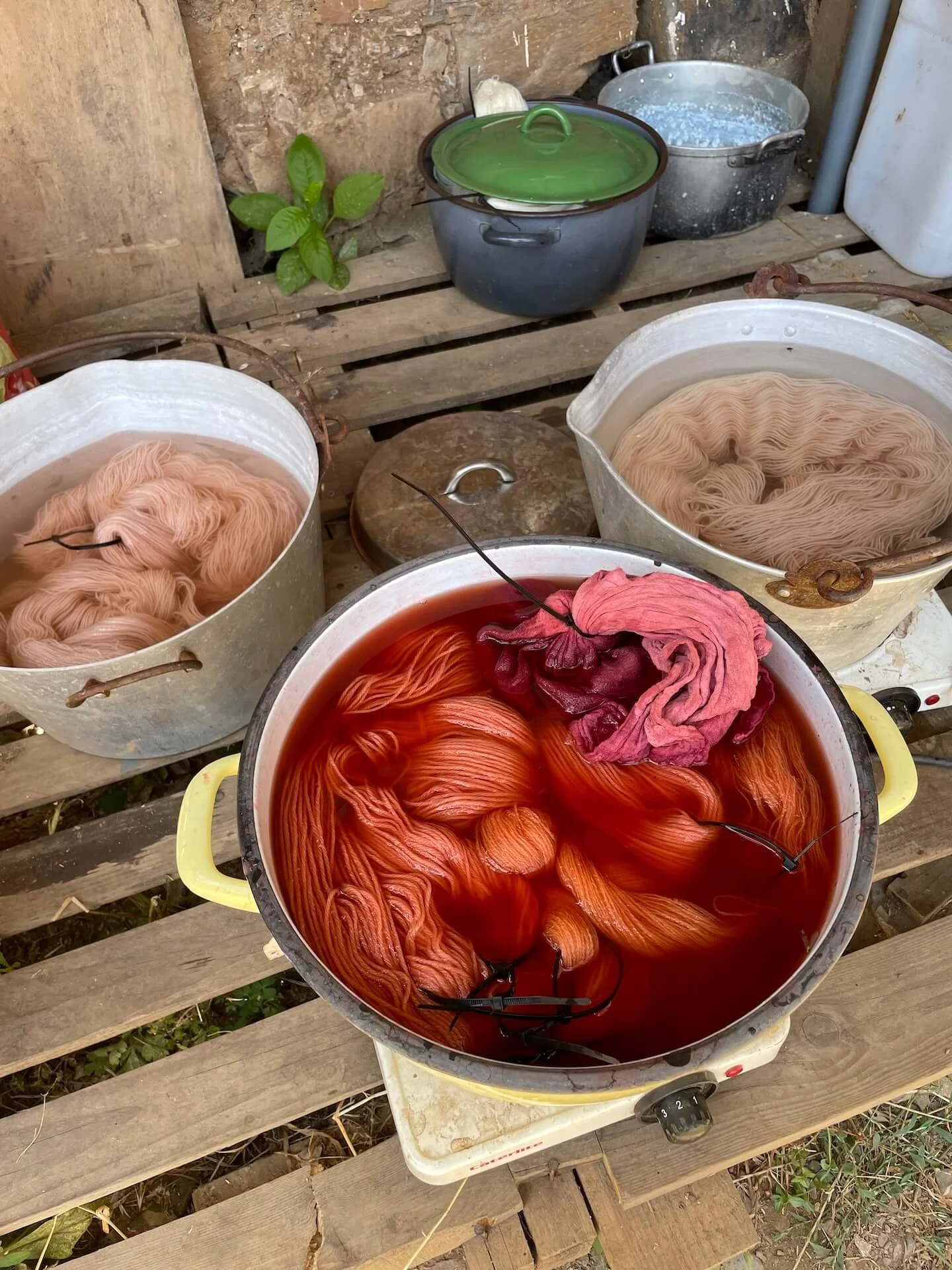
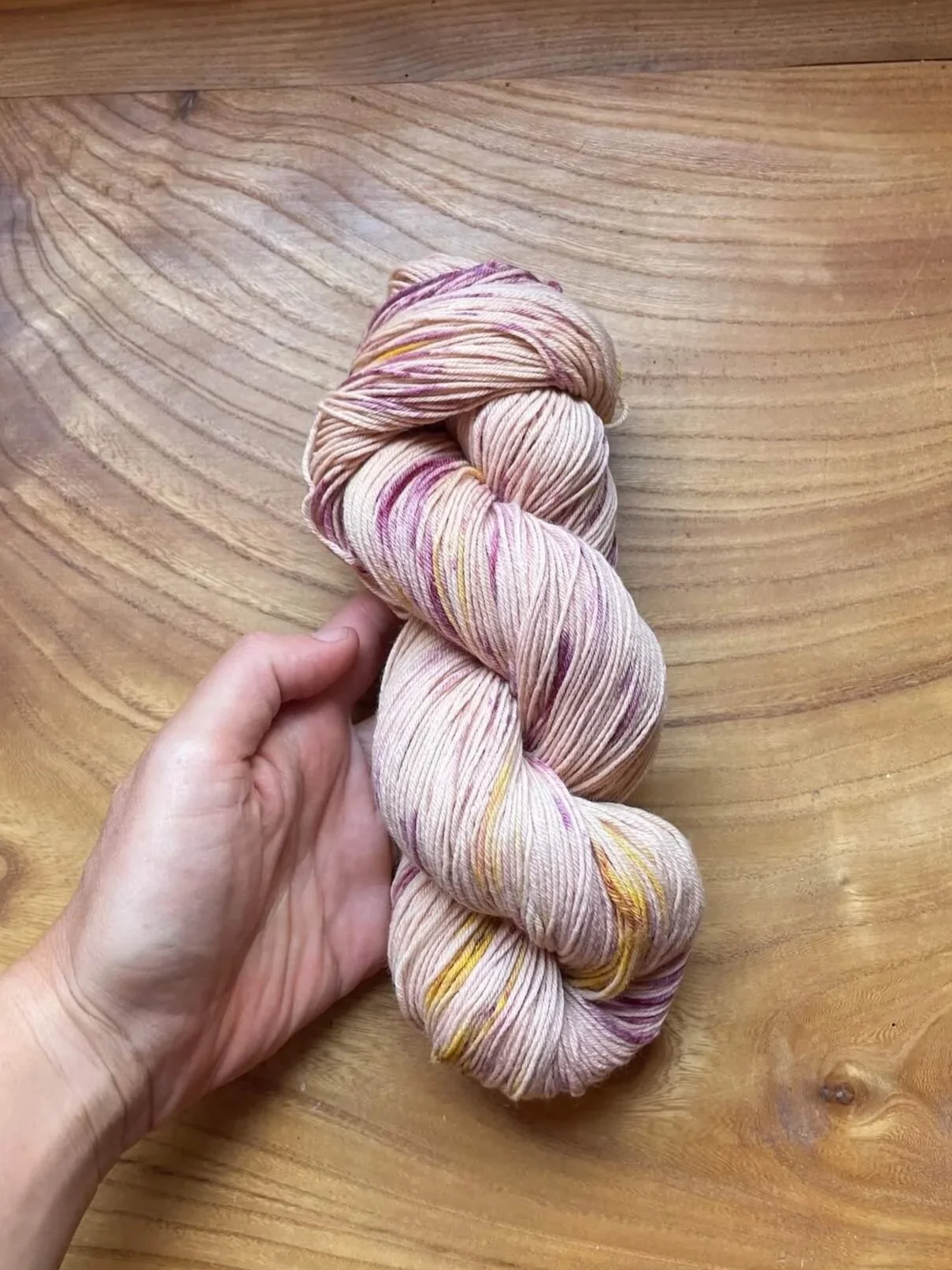
Every skein in my shop is dyed by hand by me, in small batches using natural dyes only. Where possible I also use plants as mordants. Alternatively I use food grade aluminium sulphate; like that typically used to make pickles! I do my best to forage local botanical goodies with little to no impact on the environment. Natural plant materials I use in my dyeing include leaves, roots, bark and mushrooms. Typical plants are heather, walnut, tansy, indigo. We have a lot of dyers puffball mushrooms growing near to us and these make the most wonderful browns!
Natural dyeing is a labour intensive process that requires considerable amounts of time and patience, and is also unpredictable. This makes the whole process beautiful and exciting. The results are never fully repeatable and each batch is truly unique.
Natural Dyes
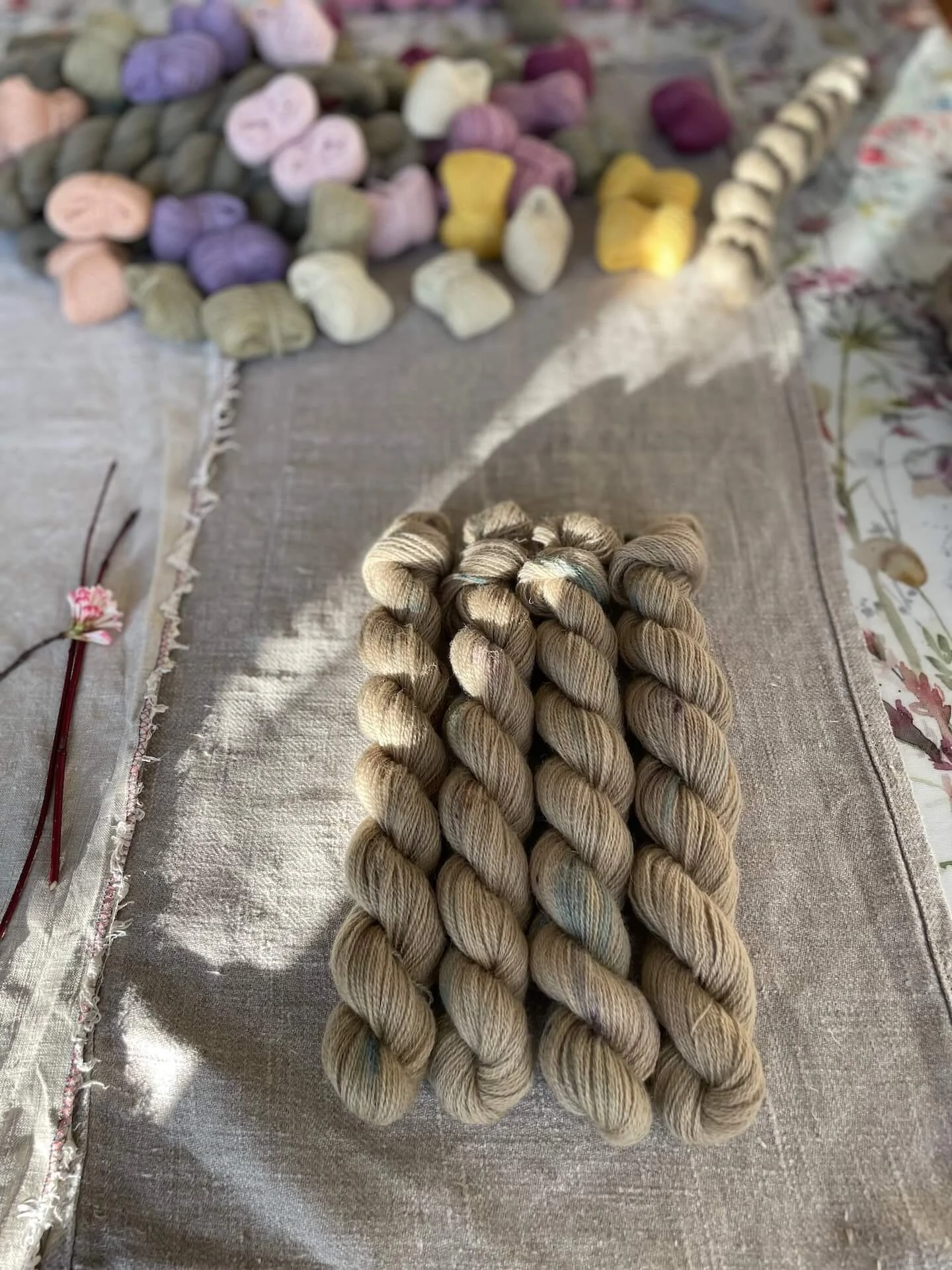
Naturally dyed yarns tend to bleed on the first time washing them. It is normal for there to be a little colour in the water, especially with darker colours or purple colours. This will do no harm and hardly change the colour of the yarn.
I recommend alternating skeins when knitting a larger garment to prevent colour pooling. It is also very important to make sure that you have bought enough to finish an entire project as no two batches of yarn will be the same. It is incredibly difficult to make repeatable colours.
Some variation in colour throughout the skeins is normal and expected when dyeing with natural dyes. For us this is a magical property when dyeing by hand with plants.
Caring for your wool
When washing garments made with my yarns it is important to use a pH neutral detergent that does not contain bleach. Some natural dyes react very strongly to alterations in pH and this can cause the colour to shift.
Natural yarns are prone to felt in changing temperatures and agitation. This is especially true when moving a skein from hot to cold! I recommend that you always wash your wool by hand in lukewarm warm water and lay them flat to dry.